Absract Archive
March 2009
Research article
Regular intake of Terminalia chebula can reduce the risk of getting typhoid fever
Abstract
Typhoid fever is a life-threatening illness caused by the bacterium Salmonella typhi. It is characterized by a persistent high fever, inflammation, ileal perforation, liver abscess, diarrhea, profuse sweating, rose colored spot and gastroenteritis. Multi drug resistance has increased worldwide. Keeping in view of the limited scope of available vaccine against salmonella infection and increasing resistant of this disease to antibiotics, the need of the day is to evaluate the efficacy of the natural plant products which can be used against this disease. In the present study aqueous extract of the fruit of Terminalia chebula (T) was evaluated for its anti salmonellae activities invitro and invivo. T exhibit anti salmonellae activity against S. typhi and S. typhimurium showing a clear zone of inhibition in vitro. T at a concentration of 10,12 and 15 mg/ml was bacteriostatic and above it was highly bactericidal. Mice pretreated with T at a dose of 100 (T100), 200 (T200) and 500 (T500) mg/kg body weight for a period of 30 days and challenged with 100000CFU of S. typhimurium exhibit a protection of 83.4%, 83.4% and 100% respectively. This study was further confirmed by studying the clearance of bacteria from liver and estimating the enzymes alanine aminotransferase and aspartate aminotransferase. The results indicated that regular intake of the above fruit can prevent salmonellae infection and can reduce the risk of getting typhoid.
Key words: Terminalia chebula, salmonella typhi, salmonella typhimurium, typhoid.Authors:K.H.Khan, S.K.Jain.
Research article
Mass multiplication of Verticillium chlamydosporium onPlant extracts and plant based solid substrates
Abstract
V.chlamydosporium, the effective biocontrol agent against nematodes can be explored practically by the mass production of its Chlamydospores. In this regard seven plant extracts including Lantana camera, Piper colubrinum, Naregamia alata, Strychnos nuxvomica, Chromolaena odorata, Glyricidia maculate and Azadirachta indica and plant based solid substrates such as tapioca powder, neem cake, coir compost and rice bran were investigated for their efficiency to induce chlamydospore production. The results revealed enhanced chlamydospore production in solitary plant extract, better induction when supplemented in synthetic media. Among solid substrates and synthetic media employed in study, rice bran and Corn Meal Agar (CDA) was proved to be promising substrates.
Key Words: V.chlamydosporium, Lantana camera, Piper colubrinum, Naregamia alata, Strychnos nuxvomica, Chromolaena odorata, Glyricidia maculate and Azadirachta indica.
Introduction
Nematodes are obligate plant parasites; most of them are pathogens that destroy the plant cells on which they feed. By using a feeding apparatus, stylet, the nematodes puncture the plant cell walls, secrete enzymes into the cells and withdraw digested cell contents.
The most important plant parasitic nematodes include root-knot nematodes (Meloidogyne spp.,), cyst nematodes (Heterodera spp., and Globodera spp.,), root lesion nematodes (Pratylenchus spp.,), stem nematodes (Ditylenchus dipsaci), burrowing nematodes (Radopholus similes) etc.
Some of the important symptoms caused by nematodes include-stunting, yellowing, wilting, necrosis, discolorations, root galls or knots root lesions and reduced flowers or fruits. Plants parasitic are a limiting factor in production and productivity of several crops. Apart from feeding and damaging the host root system they are also responsible for rendering the plants susceptible to attack by several fungal pathogens.
Authors:Anand .R, Divya Krishna, Sundaramoorthi.C Saritha.E, Bhuvaneswari.K.
Mini Review
Sophisticated Mechanism Of Bacterial Communication In Oral Biofilm
Abstract
It has become clear in recent years that periodontitis is an inflammatory disease initiated by oral microbial biofilm. Biofilms are composed of microcolonies of bacterial cells and matrix or glycocalyx. The high cell concentration in biofilm present an ideal situation for quorum sensing, is the mechanism whereby an individual bacterium in the biofilm produces small diffusible molecule that can be detected by surrounding organisms. Quorum sensing systems can be divided into Lux I / Lux R – type quorum sensing systems in gram-negative bacteria and oligopeptide / two component – type quorum sensing circuits in gram-positive bacteria. This article reviews the role of quorum sensing bacteria in oral biofilm and to provide evidence that there are alternatives to the traditional mode of fighting bacterial infection. The knowledge of the molecular resolution of quorum sensing in the context of periodontal disease and the potential for the modification of resolution pathways for the prevention and treatment of periodontal diseases.
Running title: Bacerial communication in oral biofilmKey words: Biofilm, quorum sensing, dental plaque, Lux-I/R, AHC.
Introduction
Scientists had long held the view that bacterial cells behaved as self-sufficient individuals, unable to organize themselves into groups or communicate. During infection, the bacterial mass was considered nothing more than the sum of the individuals. The idea that the bacteria could function as groups and that individual within the group could respond to the groups as a whole seemed almost ludicrous. Now it’s generally accepted that bacteria produce, and respond as groups to chemical signals and that this interaction can lead to the coordination of group bacterial activities. This phenomenon has become known as quorum sensing. Quorum sensing is the mechanism whereby an individual bacterium produces small diffusible molecule that can be detected by surrounding organisms.Authors:Tamilselvan S.
Mini Review
Molecular Diversity Analysis in Cuttle Fish (Sepia officinalis) populations using RAPD markers
Abstract
Cuttle fishes are one among the endangered species of fishes. Human interventions like hydroelectric dams, oil spills, industrial pollution, water pollution, use of high technology instruments/ vehicles emitting poisonous gases and other environmental Changes have resulted in the eradication of natural stocks contributing to the destruction of fish habitats. . The aim of this study is to detect the genetic variation in sepia officianalis from five collection sites in the area of influence of the Arabian sea *Corresponding author-Mary Reena Jacob.E-mail:reena.shabu@yahoo.co.in Tel: 0091 471 2306198, Mob: 0091 9947577163 and on.the Bay of Bengal Of Indian peninsular coast at the following Locations: kochin, kollam, Vizhinjam, chinnamuttam, colachal coast using the RAPD technique. Fifteen random primers were used in this analysis, which generated a total .of 354 markers revealing an average of 20 markers per primer in each population. The percent of polymorphism was less, only 4.0 for different primers.Random amplified polymorphic DNA (RAPDs) were applied in this Cephalopod population study. The results obtained, revealed that the fish in the Arabian Sea have a higher similarity coefficient than those from the other sampling sites attributed by differences in environmental characteristics in these regions.
Key words: Intraspecific Variation; RAPD; Polymorphic; Sepia Officianalis..
Introduction
Cuttle fish (Sepia officinalis) belongs to the family sepidae/order Sepioidea which includes Spirulidae, Sepiidae, Sepiolidae, Idiosepiidae, and epiadariidae (Voss, 20.1977).The position of the sepiolidae as a sister group of the sepiidae and the monophyly of the squids are, however questioned by some scholars (e.g.,Berthold& Engeser 22.1987,Clarke 1988,Boletzky 1999). karyological methods such as variation in hromosome 23.number and banding polymorphism are the potential tool for species identification. (Johnson and Arunachalam, 2003)Cuttle fishes are staple foods for rural and urban consumers in the tropics and an important source of rural income, particularly in coastal India. The export of Frozen Cuttlefish also showed a positive growth of 12.23% in quantity, 15.85% in value and 18.67% in US$ realization. The main market for frozen cuttlefish from India was European Union (73.50%) China.
Authors:Mary Reena Jacob.
Mini Review
Bdellovibrio bacteriovorus: Life cycle and potential as a predatory renaissance
Abstract
Bdellovibrio bacteriovorus HD100,is apredatory Gram-negative deltaproteobacterium which preys on other Gram-negative bacteria and undergoes a complex multistep developmental cycle that results in killing of its prey cell.This feature of Bdellovibrio is important in respect to its bacteriolytic nature and may be used as a bio-control agent as it can attack plant, animal, and human pathogens and there is no report of Bdellovibrio attacking mammalian cell.Now with the availability of complete genome sequence and more insight in to the organism researchers now have an opportunity to evaluate the tremendous therapeutic potential of the bacteria.
Keywords: predatory, prey cell, antimicrobial, pathogens, resistanceIntroduction
Bdellovibrio bacteriovorous, HD100 is a highly motile Gram-negative deltaproteobacterium marked with a number of conspicuous characteristics1. It is a predatory microorganism that preys on other Gram-negative bacteria including pathogenic ones1. It is ubiquitous in nature, having been discovered in a wide variety of environments that include fresh water, sewage, soil and even mammalian intestines1. (It is ubiquitous in nature, having been discovered in a wide variety of environment from fresh water to sewage and soil samples, to even mammalian intestines1). This tiny bacterium (about 0.2-0.5μm wide and 0.5-2.5μm long) is obligatorily dependent upon a prey cell for its growth1. The genome is not reduced like other obligatory bacteria2, 3. (The reason the genome is not reduced like other obligatory bacteria2, 3 has everything to do with its biphasic life cycle2,3.There is no evidence of genome reduction, which is usually observed in obligatory parasitic bacteria2,3.) It rather carries a quite large genome consisting of 3,782,950 bp, encoding 3584 proteins. The organism is especially unique among all the differentiating species of bacteria in a sense that it undergoes morphogenetic changes as a part of its biphasic life-cycle1. Bdellovibrio is also important in respect to its antibiotic nature and may be used as a control agent as it can attack plant, animal, and human pathogens1.
Authors:Aniruddha Chatterjee.
Short Communication
Comparative Analysis Of Carbon Distribution And Hydropathy PlotAbstract
The hydrophobic interactions are the dominant force that determines the biomolecular association. Carbon is the only element that contributes towards the hydrophobic interactions. The carbon distribution along protein is studied and compared with hydropathy plot. The study is carried out for human erythrocyte glucose transporter protein. Carbon distribution profile clearly explain the where there is maximum hydrophilicity or hydrophobicity. The carbon distribution profile can be an alternative method to hydropathy plot.
Keywords: Carbon distribution; sequence analysis; hydropathy plot; transporter protein.Proteins are large organic compounds made of amino acid arranged in a linear fashion. The side chain of these amino acids are chemically different from one another in some respect can be classified broadly in two ways hydrophobic and hydrophilic. Carbon content in these side chains makes the amino acid different. All Proteins are constructed from linear sequences of smaller molecules called amino acids. Proteins also fold up to form particular three dimensional shapes, which give them their specific chemical functionality. It is easily demonstrable that the linear amino acid sequence completely specifies the three dimensional structure of most proteins. In addition a protein’s three-dimensional structure is not fixed; many proteins move and flex in constrained ways and that can have a significant role in their biochemical function. Also some proteins bind to other groups of atoms that are required for them to function (P.Baudouin-Cornu et al., 2001). A widely accepted principle is that protein evolution is mainly determined by constraints on activity, specificity, folding and stability. The lowest level of biological organization is that of atoms in biological macromolecules. Specifically, individual amino acids and whole proteins can vary greatly in their content of carbon (J.G.Bragg and A.Wagner, 2007). Hydrophobic and hydrophilic residues play a major role in protein folding and function (R.Schwartz et al., 2001). The distribution hydrophobic and hydrophilic residue along polypeptide chain is critical feature of the ability of biologically evolved amino acid sequence to direct the folding of proteins (D.J.Brooks et al., 2002). Carbon is the only element contributes towards this, which is dominated by large hydrophobic residues. Protein prefers to have 27% of large hydrophobic residues (and 31.44% of carbon) in its structure for stability. This paper analyzes of carbon content in Human (Hs) Erythrocyte Glucose Transporter and compare with hydropathy plot.
Authors:Renganathan Senthil, Ekambaram Rajasekaran.
Short Communication
Removal of malachite green from its Aqueous solution by pithophora sp.
Abstract
Removal of dyes from waste water is a major ecological problem. Colourants present in dyehouse effluent are responsible for environmental pollution. Removal of malachite green from its aqueous solution by Pithopora sp. has been investigated by means of a batch system. The optimum conditions were found to be (Time 10 min, pH 5 and Concentration 15 ppm) and the maximum dye removal rate was found to be 94.35%. The effects of contact time, pH and initial concentration of dye on the adsorption of malachite green by Pithopora sp. were studied. The results showed that pH and dye concentration had no significant effects.
Keywords: Malachite green, Pithopora sp., AdsorptionIntroduction
Removal of colour from dye-bearing wastewaters is one of the major environmental problems because of difficulty in treating such wastewaters by conventional treatment methods, as most of the dyes are stable to light and oxidising agents (Mall and Upadhyay, 1998). The presence of even minute quantities of colouring substance makes it unsuitable for drinking or other recreational purposes due to its undesirable appearance and possible side effects (Donmez et al., 1999). The most commonly used methods for the removal of colour from dyestuffs are chemical precipitation and biological oxidation (Fernadez et al., 1995). Photo-catalytic oxidation and ozone treatment are the other alternative technologies commonly employed. However, these methods are effective and economic only when the solute concentrations are relatively high.
Pithophora sp. belongs to the family of filamentous green algae. It is a common mat forming species that inhabits ponds. It clogs waterways and lakes with its large mats and filaments. It may range in colour from lime green to dark green or greenish brown. These algae possess the ability to fix and store nitrogen for their growth. When it becomes dense enough, the plant produces gas bubbles that become trapped in the water. In warmer water, it becomes buoyant and rises and floats on the water surface (Abbot and Hollenberg, 1976).
Adsorption using biomass as adsorbents (biosorption) has recently attracted significant interest (Figueira et al., 2000). It has the advantages of achieving high purity of the treated wastewater through the use of cheap sorbents (Kratochvil and Volesky, 1998). Studies on various types of non-living biomasses such as algae, fungi, nut hulls and wood sawdust have shown that such materials may sequestrate dyes from aqueous solutions accumulating them within their structures; thus such materials may be used for the removal of dyes from wastewater (Matheictal et al., 1997). The sorption involves various mechanisms, mainly chemisorption, ion-exchange, adsorption by physical forces and ion entrapment in inter and intrafibrilar capillaries; oxidation / reduction reactions may also take place in the biosorbent (Yang and Volesky, 1999). The objective of this work is to study the sorption of Malachite Green dye on Pithophora sp.Authors:S. Sivamani,C. Parvathi,C. Prakash, C. V. Koushik.
Short Communication
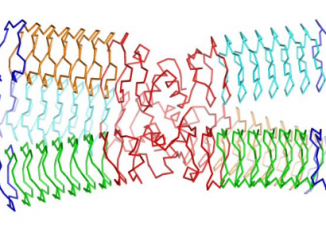
A Study of Anti malarial Drug Docking Using Hex
Abstract
Malaria is the one of most serious, complex and refractory health problems facing humanity in this century. There are four identified species of malarial parasites, namely, Plasmodium vivax, P.falciparum, P.ovale and P.malariae. . Many drugs have been tested for their potential anti malarial effects. Research into newer anti-malarials being scanty, such attempts might throw up one or two candidates for use in malaria, however these drugs are yet to find a place in standard anti malarial regimen. Clindamycin, fluroquinolones like ciprofloxacin and Norfloxacin, etc. have been found to be effective against malarial parasites. Atovaquone, Desferrioxamine; azithromycin, Pyronaridine, Piperaquine, WR-288, 605 and 566C80 are drugs undergoing research. The Insilco docking method to dock the eba-175 (P.falciparum) and azithromycin. Suggested that d azithromycin could be potential antimalarial drug. .
Introduction
Malaria affects more than 2400 million people, over 40% of the world’s population, in more than 10 countries in the tropics from South America to the Indian peninsula. The tropics provide ideal breeding and living conditions for the Anopheles mosquito. WHO forecasts a 16% growth in malaria cases annually about 1.5 million to 3 million people die of malaria every year (85% of these occur in Africa), accounting for about 4-5% of all fatalities in the world. (Joachimiak et al2001) . Invasion of red blood cells by the malaria parasite Plasmodium falciparum marks the commencement of the clinical manifestations of the disease. During invasion, erythrocyte-binding antigen-175 (EBA-175), a protein on the surface of the parasite, binds to glycophorin A (GPA) on red blood cells. Of the several domains in EBA-175, region ll (Rll) is necessary and sufficient for binding to GPA. (Amador and Patarroyo, 1996) Binding of the parasite to the red blood cells requires the interaction between (EBA-175), and the sugars of glycophorin A (GPA) on the red blood cell. The structure of Rll shows that it is a dimmer, and that the two molecules interact extensively with one another in an anti-parallel fashion resembling a handshake. The dimer results in the formation of two channels in the center of the molecule (Tolia., 2003).Authors:Palanichamy Rettu Preethi, Maruthamuthu Rajadurai,CS.Vinobha
Ekambaram Rajasekaran.